quiet window actuator buying guide
Direct buyer answer
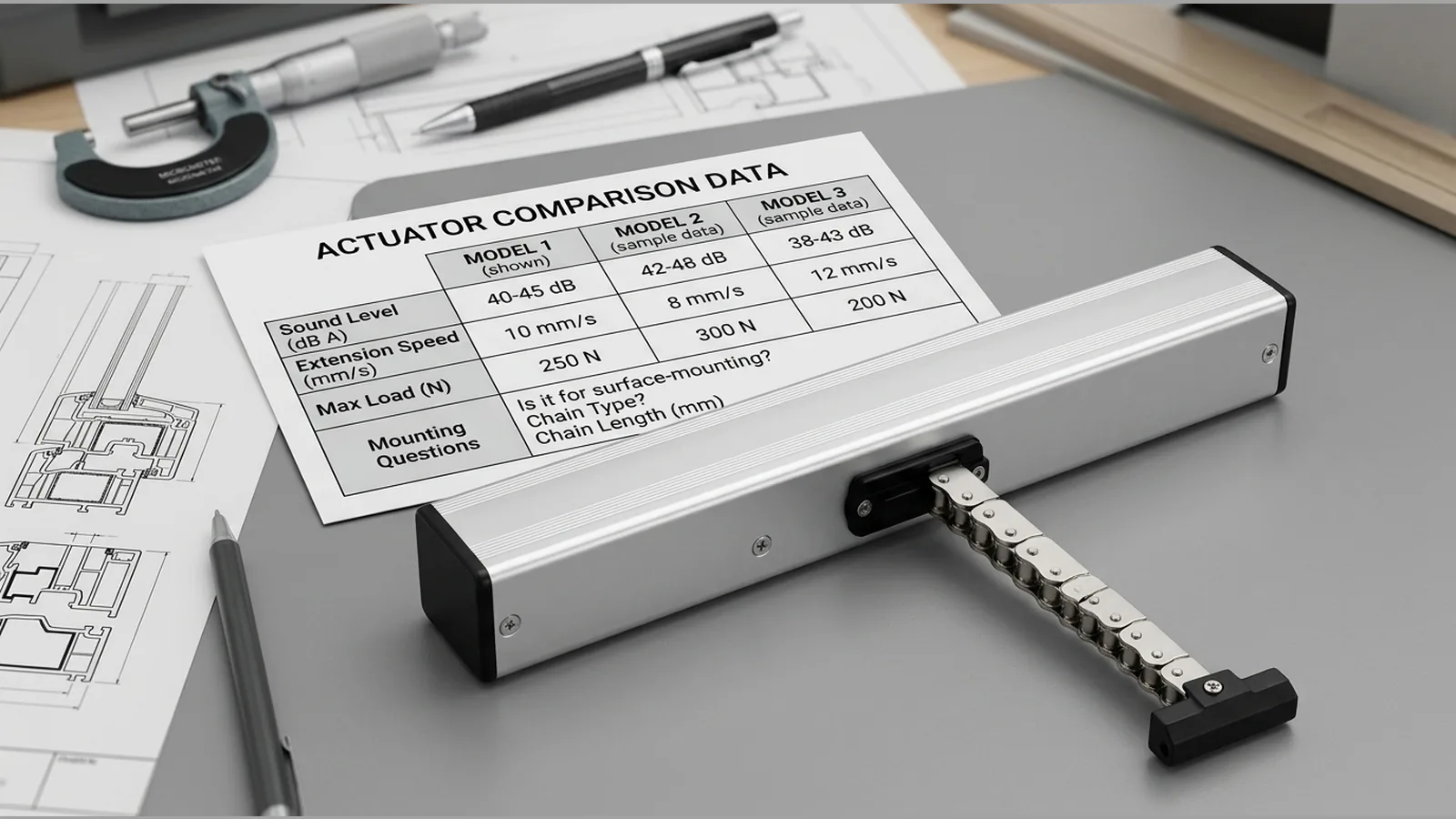
A practical quiet window actuator buying guide starts with system factors—control mode, motor loading, window type, mounting and published test data—rather than marketing words such as “quiet” or “silent”. No verified sound-pressure value, speed figure or quiet-mode claim is available for the projection discussed here, so treat noise as something you verify against comparable manufacturer data and your own window setup before you buy.
Why noise is system-specific
Audibility is rarely a property of the chain actuator alone. Controller choice and motor loading belong to system design, so the same motor can sound different once it is paired with a different controller or driven under a different load. Assess the full arrangement: actuator, controller, window and how the load is applied in normal use.
Published sound data versus claims
Prefer published product data and installation guidance over vague quietness claims. Without comparable sound tests, do not rank models by decibels or assume one kit is quieter than another. Ask suppliers for the document that states how speed and audibility were assessed, and note when no such figure is given.
Speed and control modes
Manufacturer data for chain actuators shows that control mode can change both speed and audibility, so both need assessment together. Do not infer quiet running from low voltage alone, and do not assume unverified “quiet” controller modes exist unless the maker documents them. When comparing options, ask which modes are specified and whether speed settings are stated in the same datasheet that discusses sound.
Window and mounting condition
Window type, mounting method and window condition are model-specific operational factors. A roof light, hinged casement or other sash can transmit motor and chain noise differently once brackets, alignment and weather seals are in place. Check that the installation instructions for your window type cover mounting, travel and any limits on how the sash may be driven.
Comparison questions
Use this checklist when you compare low noise electric window opener options, chain actuator sound level statements or any quiet roof window motor claim:
- Is there published sound or speed data for the exact model, or only marketing wording?
- Which control modes are documented, and do they change speed and audibility?
- What controller and motor loading does the maker specify for your window?
- Do installation notes cover your window type, mounting and condition?
- Are you comparing like-for-like documents, not mixed claims without tests?
Who should not buy on noise alone
Skip a purchase driven only by “quiet” labelling if you need a confirmed sound-pressure value, a named quiet mode or a decibel comparison with another product. Those buyers should wait for documented data that matches the installed system. Noise-sensitive rooms still need the same system checks—mode, load, mounting and paperwork—before any shortlist is final.
Soft product next step
If you are reviewing an automatic skylight opener kit as part of this buying process, check stroke length, control accessories and the stated current product details for the automatic skylight opener kit, including the 12-month warranty term. Use that page to confirm what is supplied with the kit; do not treat the listing as proof of silent or low-noise operation.
FAQ
Can I rank actuators by how quiet they are?
Not without comparable published tests. Avoid decibel rankings built from mixed claims or incomplete datasheets.
Does a 24 V motor mean quieter running?
No. Do not infer quiet operation from low voltage. Speed, control mode, loading and mounting still need checking.
What should I ask about chain actuator sound level?
Ask whether control mode changes speed and audibility, and request the product data that states how those points were assessed.
Is mounting important for a quiet roof window motor?
Yes. Window type, mounting and window condition affect how the system behaves in use, so follow model-specific installation guidance.